
Cruciate Ligament Injury
The cruciate ligament lies within the knee joint. Cruciate ligament tear or injury is the most common injury in dogs. A ruptured cruciate ligament in dogs can be caused by sudden twisting motions, excessive strain during physical activity, or degeneration and stretching of the cruciate ligament. It can be chronic or acute (sudden) and minor trauma to the ligament may be enough to cause complete tear.
Signs of cruciate tear:
-Limping or not placing weight on a particular hindlimb
-When at rest, the dog tries to offload the joint by placing less weight on it. This can be seen by toe touching or holding the affected leg slightly to the side or back.
-When sitting or lying down, the dog avoids fully flexing the joint and leaves the leg outstretched
-Muscle loss on the affected leg if it has been affected for a while
-Reluctance to exercise
It’s important to remember every dog will be different. Your pet may have only one of these signs or multiple
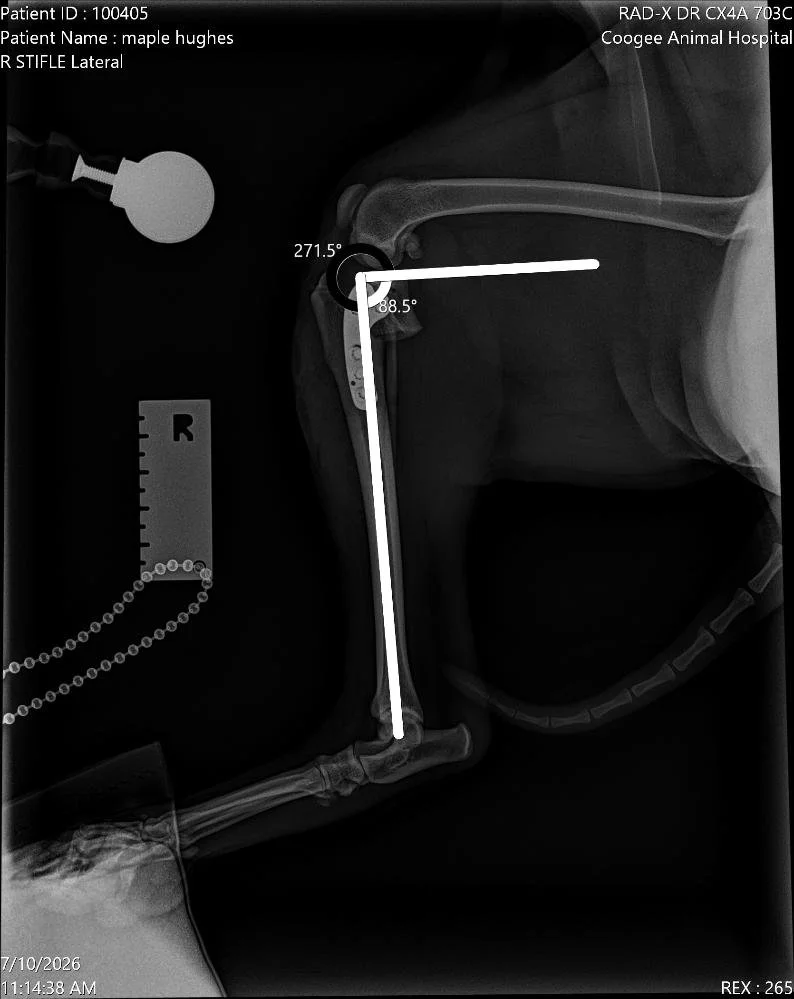
Treatment: TPLO Surgery
A TPLO (Tibial Plateau Leveling Osteotomy) is a specialised orthopedic surgery performed to treat a torn cranial cruciate ligament (CrCL) in a dog’s knee. TPLO surgery is currently the recommended treatment technique for all breeds and sizes of dogs with cruciate ligamant disease. Compared with some other surgical options, a TPLO often provides excellent outcomes and a quicker return to comfortable activity when combined with appropriate post operative care and rehabilitation.
About:
Most cases start with a a partial tear and inevitebly progress to a complete tear. Without treatment, the unstable joint can lead to ongoing pain and progressive arthritis. The TPLO procedure appears as a very unusual technique to repair a ruptured ligament, who would have thought that cutting a bone and then stabilising it with a plate and screws would solve the problem? The key is that the surgeon changes the angle of the top of the tibia (shin bone), thereby taking the load away from the diseased ligament . By carefully cutting and rotating this section of bone and securing it with a plate and screws, the knee becomes stable even without the damaged ligament. This allows the dog to bear weight more comfortably and return to normal movement.
Most dogs begin to bear weight on the leg within a few days after surgery, with gradual improvement over the following weeks. With proper recovery management including rest, controlled exercise and follow up visits, most dogs return to their normal, active lives. At Coogee Veterinary Hospital we have experienced surgeons that perform this procedure regularly.
If you notice that your dog is not using one of their back legs well, is lame or seems in pain, the first thing is to make an appointment to see us. The vet can examine your pet and generally through history and physical examination in particular palpation of the affected leg, determine that cruciate ligament disease is likely. At this stage we would discuss your options, x-rays are needed to confirm the diagnosis and determine the surgical plan. If after x-rays the diagnosis is confirmed , ideally surgery will be performed the same day under the same anaesthetic.
The patients that experience the best surgical results are those that have the diagnosis established early and that carefully follow the post operative plan. If the rupture occurred some time ago there can be complications with others structures within the knee ,especially with the menisci (the knees shock absorber).